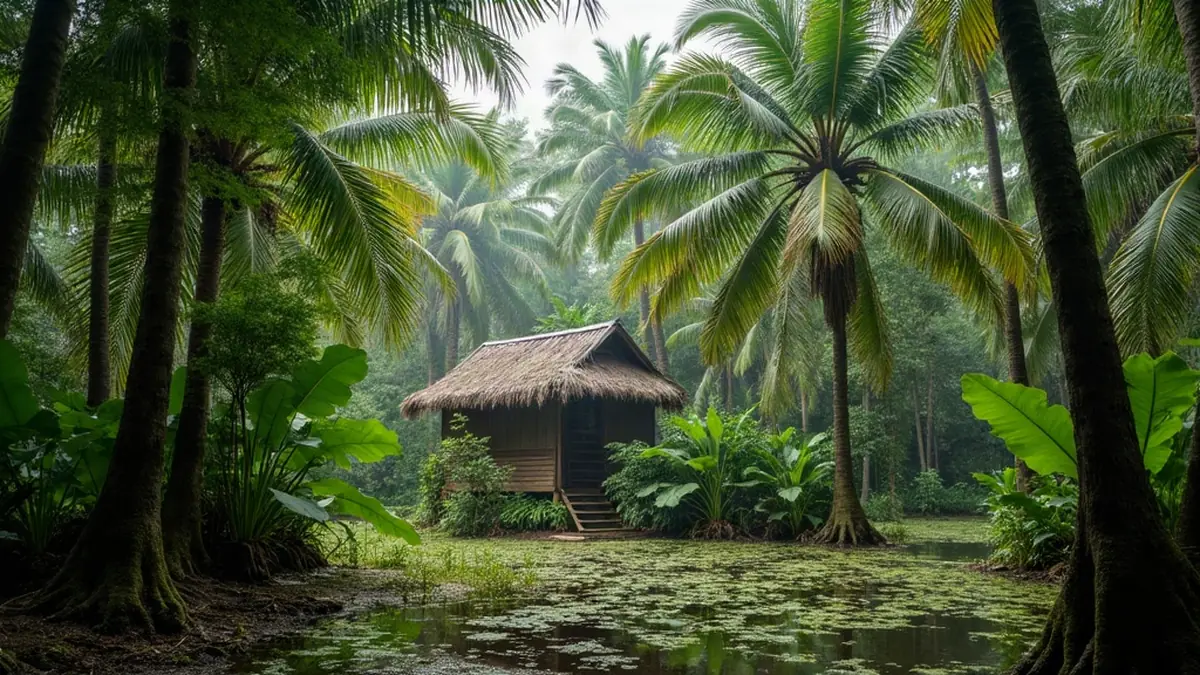
A Mentawai sago making experience takes place in villages on Siberut, where host families fell a sago palm, rasp the starchy pith, wash and filter it, then cook the starch in leaves or bamboo. Visitors can often join on a guided trek of three days or more, if the family is processing sago during the stay.
Planning this? Send the travel desk your dates and group size for practical next steps.
Ask on WhatsAppSago is the staple food of many Mentawai communities, and preparing it is hard, communal work that shapes daily life in the river villages of Siberut. For visitors, a Mentawai sago making experience is one of the most meaningful ways to spend time with a host family, because it is real work, not a show. It also means it cannot be booked like a cooking class. This page explains what the process involves, how to join respectfully, and how to fit it into a trip.
We are an independent planning guide. We do not run village tours ourselves. We help travelers plan Siberut cultural trips and connect them with guides who work with host communities.
What happens during a Mentawai sago making experience
Sago comes from the pith of the sago palm, which grows in the swampy lowlands along Siberut’s rivers. Processing follows a set of stages that can take a family one or more days, depending on the size of the palm and how many people help.
| Stage | What happens | How visitors can help |
|---|---|---|
| Felling and splitting | A mature palm is cut down and the trunk opened to expose the pith | Usually watch; this is skilled and heavy work |
| Rasping | The pith is broken up with a rough grater or pounder | Often invited to take a turn |
| Washing and filtering | Water is mixed through the pulp; starch is strained through plant fibre and settles | Help knead and pour, under guidance |
| Storing and cooking | Damp starch is packed and later roasted in leaves or baked in bamboo | Help wrap and cook, then share the meal |
Local names for sago dishes include sagu kapurut, starch wrapped in leaves and roasted, and sago baked in bamboo tubes. Terminology and recipes vary between communities, so your guide or host may use different words. Sago is usually eaten with fish, vegetables or other dishes, and it appears at communal meals and ceremonies as well as everyday food.
Where the experience takes place
Most visitors join sago work during a cultural trek in South Siberut. The usual route starts with the fast ferry from Padang to Maileppet, a short transfer to Muara Siberut, and then a river longboat inland towards villages such as Madobag, Ugai, Butui or Matotonan. Which village you visit depends on your guide, the river level and the community’s permission.
Siberut National Park, established in 1993, covers much of the island’s forest, and Siberut has been recognised as a UNESCO Biosphere Reserve since 1981. Treks combine village life with forest walks, and with luck, sightings of endemic primates such as Kloss’s gibbon.
For ferry details see our Padang to Siberut ferry tickets guide, and for the wider picture of village trips, the cultural and jungle immersion page.
Why it cannot be guaranteed
Sago processing happens when a family needs food and a palm is ready, not on a tourist timetable. Weather, ceremonies, funerals, harvests and the family’s own plans all affect what happens on a given day. A trustworthy guide will tell you sago work is likely or possible, never guaranteed. Be cautious of anyone promising a fixed “sago show” on a set date, since that usually means it has been staged.
Longer stays raise your chances. A three-day trek gives a reasonable opportunity, and five days or more gives more time to take part in daily life naturally.
How to join respectfully
- Ask before you handle tools, enter an uma longhouse, or photograph people. Your guide can ask for you.
- Follow your host’s lead. Rasping and washing look simple but take practice.
- Respect ceremonies. A sikerei, a Mentawai ritual specialist and healer, may lead ceremonies; observe only when invited.
- Bring useful gifts if your guide recommends them, and pay agreed fees fairly so income reaches the host family.
- Dress for mud and water. Washing sago is wet work in swampy ground.
Our eco-tourism and sustainable travel guide has more on responsible village visits.
Trip lengths and what’s usually included
| Trip length | Typical content | Chance of sago work |
|---|---|---|
| 3 days | River trip, one or two village nights, short forest walk | Possible |
| 5 days | Two villages, longer walks, more time with a host family | Good |
| 7 to 10 days | Deep immersion, several villages, forest and river | Best |
Village trek packages usually include a guide, river transport, meals and village accommodation. They may or may not include the ferry from Padang, park or village fees, and gifts. Pricing is quoted by group or per person per day and varies by guide, group size and season, so ask for an itemised quote.
Best time to go
Sago is processed year-round. The drier months, roughly April to October, usually mean easier trails and river travel, while November to March brings more rain and mud. Rain can fall in any month near the equator, so pack for wet conditions whenever you go.
Quick facts
- Where: river villages on Siberut, mainly in the south.
- Access: fast ferry Padang to Maileppet, then Muara Siberut and longboat.
- Process: fell, rasp, wash and filter, then cook in leaves or bamboo.
- Not guaranteed: depends on the family’s work schedule.
- Recommended trek length: 3 days minimum, 5 or more for a better chance.
Frequently asked questions
Can tourists really take part in sago making?
Often, yes, when processing is happening during your stay and the host family is happy for you to help. Rasping, washing and cooking are the stages visitors most commonly join.
Is the sago making experience suitable for children?
Older children who are comfortable with mud, heat and basic village conditions often enjoy it. Treks involve river travel and walking, so discuss fitness and safety with your guide first.
What does sago taste like?
Cooked sago starch is mild and slightly chewy, a neutral staple that takes on the flavour of what it is eaten with.
Can I combine sago making with a surf trip?
Yes. Many travelers spend three to five days on Siberut and then take the ferry back to Padang before heading to Sipora for surf. See our tour itinerary templates.
Do I need a permit?
Your guide arranges village permission and advises on any park or local fees. Confirm what is included before you travel.
Plan your Siberut visit
Tell us your dates and how long you can spend on Siberut, and we will help you plan a respectful village trek as part of your Mentawai Islands trip. WhatsApp +62 811 3941 4563 or email bd@juaraholding.com.